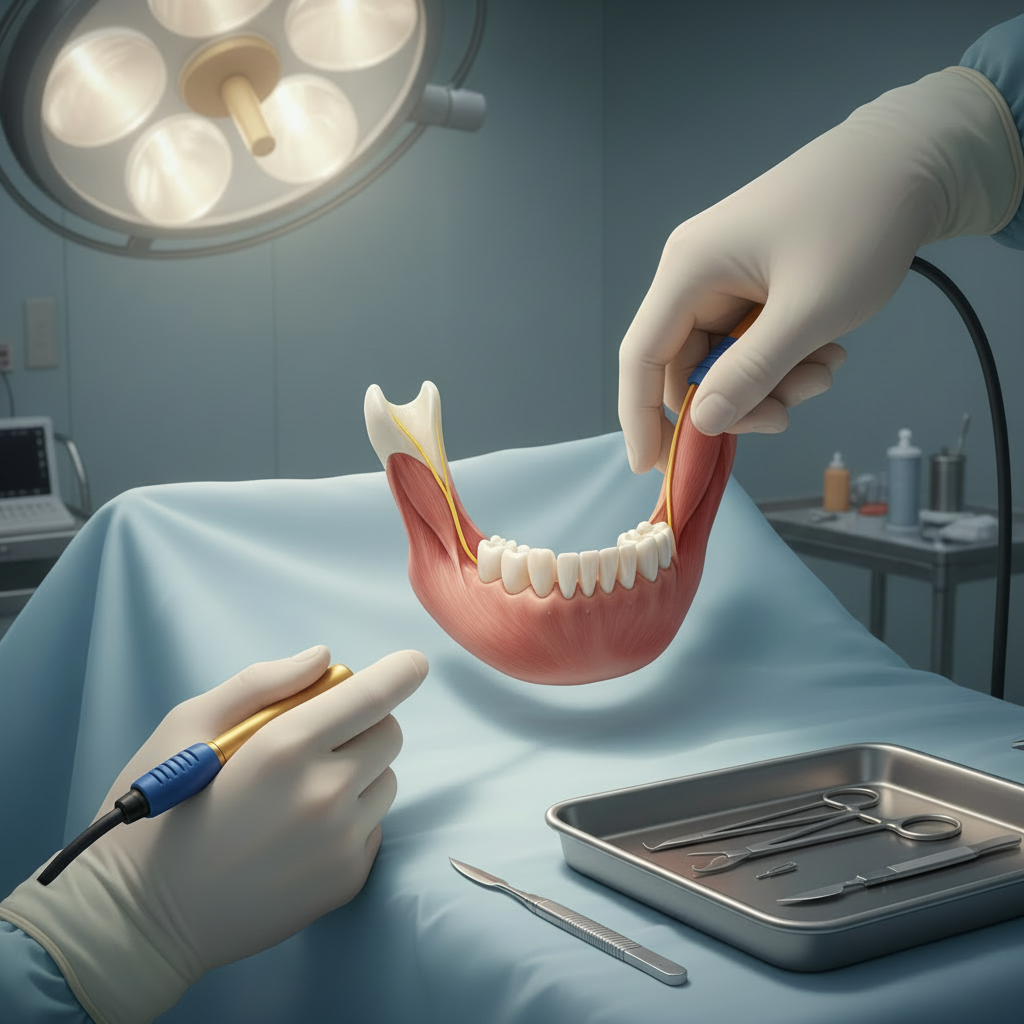
You open your mouth to yawn, and you hear a loud pop. You try to chew a piece of steak, and a sharp pain shoots through your face. For many, these are occasional annoyances. But for those suffering from Temporomandibular Joint (TMJ) disorders, they are constant, debilitating companions.
Living with chronic jaw pain changes how you eat, how you speak, and even how you sleep. It can feel like a cycle with no end. However, understanding the mechanics of your jaw and knowing when to seek advanced treatment can be the key to reclaiming your life.
While many cases of TMJ dysfunction can be managed with non-invasive methods, severe structural issues often require a surgical solution. Dr. Larry Wolford is a world-renowned leader in this field, offering hope to patients who have exhausted other options.
What Exactly is a TMJ Disorder?
The temporomandibular joint is one of the most complex joints in your body. It acts like a sliding hinge, connecting your jawbone to your skull. You have one on each side of your jaw.
When this joint works correctly, you can talk, chew, and yawn with smooth, pain-free movement. A TMJ disorder (often called TMD) occurs when there is a problem with the joint itself, the disc that cushions the movement, or the muscles controlling the jaw.
This isn’t just about a “bad bite.” It can involve:
- Displaced discs: The cushioning disc slips out of place.
- Arthritis: Inflammation wears down the bone and cartilage.
- Trauma: Previous injuries that damage the joint structure.
- Idiopathic Condylar Resorption (ICR): A condition where the jaw bone breaks down and shrinks.
Recognizing the Signs: It’s More Than Just Pain
Pain is the most obvious sign, but TMJ disorders often present a variety of symptoms that can affect your entire head and neck area. Recognizing these early is crucial for effective treatment.
Common symptoms include:
- Audible joint noise: Clicking, popping, or grating sounds (crepitus) when you open or close your mouth.
- Lockjaw: The jaw gets stuck in an open or closed position.
- Radiating pain: Discomfort that spreads to the face, jaw, or neck.
- Ear issues: Ringing in the ears (tinnitus) or a feeling of fullness/stuffiness in the ears, often without an infection.
- Headaches: Chronic headaches or migraines that don’t respond well to typical medication.
- Change in bite: Your upper and lower teeth no longer fit together properly.
Conservative Care vs. Surgical Intervention
If you visit a general dentist or doctor with jaw pain, they will likely start with conservative treatments. This is the correct first step for many patients.
Initial treatments often involve:
- Rest and diet changes: Eating soft foods and avoiding extreme jaw movements.
- Physical therapy: Exercises to strengthen jaw muscles.
- Splints or mouthguards: Oral appliances worn at night to prevent grinding (bruxism).
- Medication: Anti-inflammatories or muscle relaxers.
When Is It Time for Surgery?
Conservative treatments manage symptoms, but they rarely fix structural damage. If your tire is flat, you can keep pumping it with air (conservative treatment), or you can patch the hole (surgery).
You should consider a surgical consultation if:
- Non-surgical treatments fail: You have tried splints, meds, and therapy for months with no relief.
- There is significant pathology: Imaging shows bone degeneration, tumors, or severe arthritis.
- Your daily life is impacted: You cannot eat solid foods, you are in constant pain, or your airway is restricted.
- Functional deformity: Your jaw structure is visibly altering your facial appearance or bite.
Dr. Wolford’s Expertise: Total Joint Replacement
When surgery is necessary, choosing the right surgeon is critical. The TMJ is delicate, surrounded by major nerves and blood vessels.
Dr. Larry Wolford is a pioneer in the field of TMJ surgery, specifically regarding Total Joint Replacement. Just as a damaged knee or hip can be replaced with a prosthetic to restore function, a severely damaged jaw joint can be replaced.
Why Total Joint Replacement?
For patients with end-stage joint disease, repairing the natural joint may no longer be viable. In these complex cases, Dr. Wolford utilizes custom-made total joint prostheses.
These are not “off-the-shelf” parts. They are custom-engineered for your specific anatomy using advanced 3D imaging and modeling. This approach ensures:
- Precise fit: The implant fits your skull and jaw perfectly.
- Restored function: You can open your mouth wider and chew without pain.
- Long-term stability: Custom implants offer a permanent solution where other repairs might fail over time.
- Combined correction: Dr. Wolford often performs total joint replacement in conjunction with orthognathic (jaw realignment) surgery to fix the bite and airway simultaneously.
Don’t Let Pain Define Your Future
TMJ disorders are complex, but they are treatable. You do not have to accept a life of limited diet and chronic pain. Whether you need a joint repositioning or a total joint replacement, the goal is always the same: to restore your function and your quality of life.
If you are struggling with jaw pain that won’t go away, or if other treatments have failed you, it is time to look at the structural cause.
Schedule a consultation with Dr. Larry Wolford today. Let us evaluate your condition and discuss a personalized treatment plan that addresses the root of your pain, not just the symptoms.