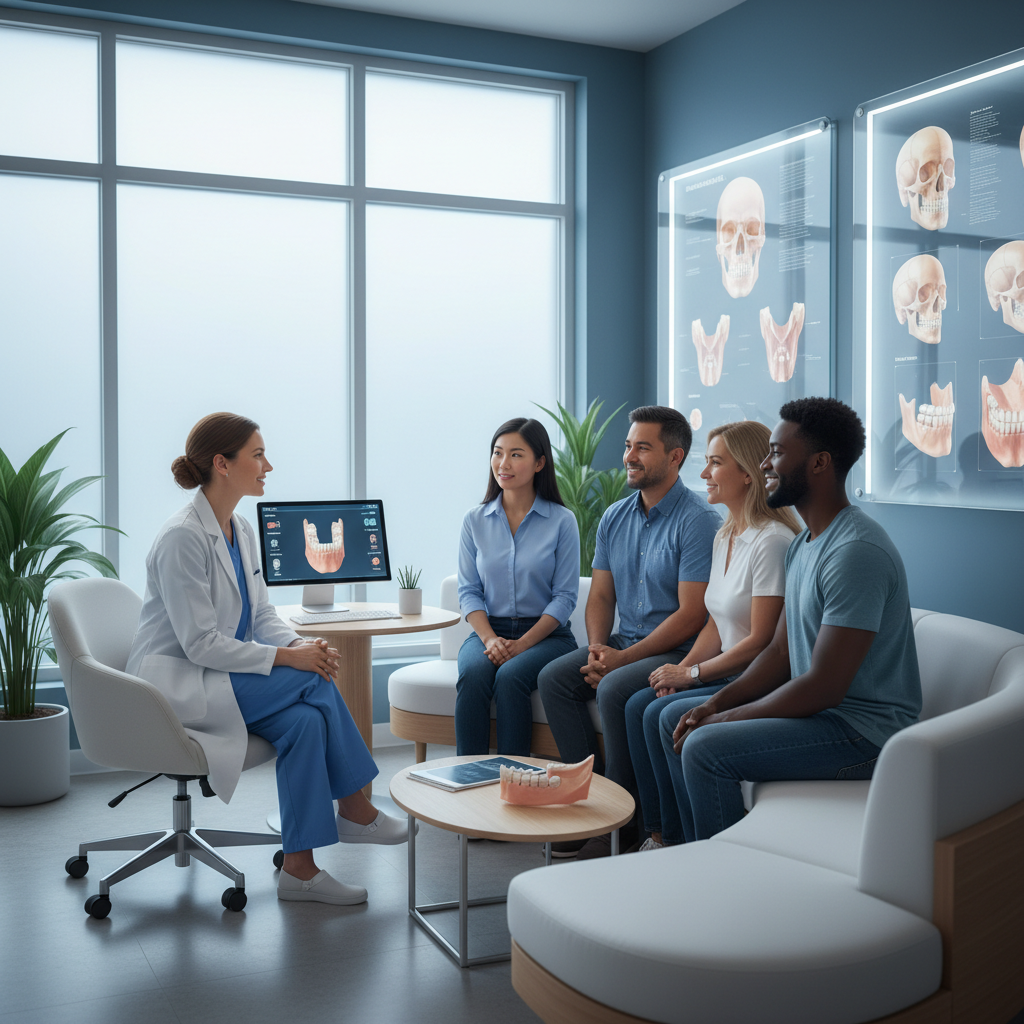
Jaw misalignment affects far more than appearance. For many patients, the effects extend to everyday functions—chewing, speaking, breathing, and sleeping. When braces and other orthodontic treatments reach their limits, orthognathic surgery offers a path forward that addresses the underlying skeletal cause rather than just the symptoms.
Orthognathic surgery (also known as corrective jaw surgery) repositions the upper jaw, lower jaw, or both, bringing them into proper structural alignment. It is a specialized field of oral and maxillofacial surgery, performed in coordination with orthodontic treatment as part of a comprehensive, multi-year care plan. The results—functional, aesthetic, and psychological—can be life-changing.
This guide covers what orthognathic surgery is, the conditions it treats, its proven benefits, and what makes the approach of Dr. Larry M. Wolford, DMD, among the most advanced in the world.
What Is Orthognathic Surgery?
Orthognathic surgery changes the skeletal structure of the jaw. Unlike braces, which move teeth within the existing bone, corrective jaw surgery physically repositions the jaw itself. This distinction matters: it is the only treatment capable of correcting a dentofacial deformity at its structural root.
According to the Cleveland Clinic, orthognathic surgery has a success rate of approximately 93.9%, and most patients report a meaningful improvement in quality of life following the procedure.
The process typically unfolds over two to three years and involves three phases:
- Pre-surgical orthodontics: Braces align the teeth so they will fit together correctly once the jaw is repositioned.
- Surgery: An oral and maxillofacial surgeon repositions one or both jaws, securing them with surgical plates, screws, or wires.
- Post-surgical orthodontics: Continued orthodontic treatment refines the bite and maintains the new jaw position.
The three primary surgical procedures used are the maxillary osteotomy (upper jaw), mandibular osteotomy (lower jaw), and bimaxillary osteotomy (both jaws simultaneously).
Common Jaw Misalignments Orthognathic Surgery Treats
Jaw misalignment—clinically referred to as malocclusion or dentofacial deformity—encompasses a range of structural conditions. The American Association of Oral and Maxillofacial Surgeons (AAOMS) identifies the following as among the most common presentations:
Overbite
An overbite occurs when the upper jaw protrudes significantly beyond the lower jaw. Mild overbites are common and manageable with orthodontics alone. Severe overbites, however, can cause difficulty chewing, jaw pain, and accelerated wear on the teeth—and typically require surgical correction.
Underbite
An underbite describes a lower jaw that extends further forward than the upper jaw. This leads to functional difficulties with chewing and speaking, as well as aesthetic concerns. A mandibular osteotomy repositions the lower jaw backward, while a maxillary osteotomy can advance the upper jaw forward to achieve balance.
Open Bite
An open bite is characterized by a gap between the upper and lower front teeth when the mouth is closed. This prevents proper biting and is frequently associated with speech difficulties. It may develop from prolonged thumb-sucking in childhood, tongue-thrusting habits, or skeletal abnormalities.
Crossbite
In a crossbite, some of the upper teeth sit inside the lower teeth rather than outside them. This misalignment affects both chewing function and facial symmetry. A maxillary osteotomy is commonly used to widen and reposition the upper jaw.
Facial Asymmetry
Asymmetry involving the jaw structures creates an uneven facial appearance and often contributes to an unbalanced bite. A double jaw osteotomy—which corrects both jaws simultaneously—addresses this comprehensively, improving both function and facial harmony.
TMJ Disorders
Temporomandibular joint (TMJ) disorders frequently coexist with jaw misalignment. Chronic jaw pain, clicking, restricted movement, and headaches are common symptoms. In complex cases, TMJ pathology must be addressed alongside orthognathic surgery to achieve a stable, lasting outcome.
Obstructive Sleep Apnea (OSA)
Jaw misalignment, particularly a retruded lower jaw, can narrow the upper airway and contribute to obstructive sleep apnea. Corrective jaw surgery—especially when combined with advancement of the maxillomandibular complex—significantly expands the oropharyngeal airway and can eliminate the need for CPAP devices in appropriately selected patients.
The Benefits of Orthognathic Surgery
The decision to pursue orthognathic surgery is a significant one. The treatment timeline is long, and recovery demands patience. For patients with clinically significant jaw misalignment, however, the outcomes justify that commitment across several dimensions.
Improved Bite Function and Oral Health
Proper jaw alignment enables efficient chewing, clearer speech, and better oral hygiene. Misaligned teeth are harder to clean and more susceptible to decay and gum disease. Correcting the underlying jaw position addresses these risks structurally and permanently.
Airway and Sleep Improvement
Advancing the jaws forward—particularly in a counter-clockwise direction—significantly increases the volume of the oropharyngeal airway. For patients with obstructive sleep apnea, this translates to improved breathing during sleep and a measurable reduction in apnea events.
Facial Aesthetics and Symmetry
Jaw surgery does not simply fix a bite; it reshapes the lower third of the face. Patients consistently report greater satisfaction with their facial balance and profile following surgery. Genioplasty—surgical repositioning or reshaping of the chin—is often performed in conjunction with orthognathic surgery to further refine facial harmony.
Quality of Life
The evidence here is clear and consistent. A systematic review and meta-analysis published in the British Journal of Oral and Maxillofacial Surgery (Megera et al., 2021) analyzed data from 12 studies and concluded that orthognathic surgery generates a statistically significant positive impact on quality of life in patients with dentofacial deformity, measured using both the Oral Health Impact Profile (OHIP-14) and the Orthognathic Quality of Life Questionnaire (OQLQ). This finding held regardless of the type of deformity or the specific surgical approach used.
Functional improvements, reduced psychological distress, and greater self-confidence are all consistently documented across the peer-reviewed literature.
Psychological and Social Well-Being
Dentofacial deformities carry a well-documented psychosocial burden. Patients often experience social difficulties, reduced self-esteem, and in some cases anxiety or depression related to their appearance or functional limitations. Correction of these deformities reliably improves psychological outcomes—with the most substantial gains in patients whose preoperative quality of life was most severely affected.
Risks and Recovery: What Patients Should Know
Like any major surgical procedure, orthognathic surgery carries risks. General surgical risks include bleeding, infection, and reactions to anesthesia. Procedure-specific complications may include temporary or lingering numbness around the mouth, difficulty opening the jaw fully, and, in rare cases, relapse of the corrected jaw position.
Understanding the recovery timeline is equally important. The initial healing phase takes approximately six weeks, during which patients follow a soft or liquid diet and manage swelling and discomfort. Most patients return to work or school within three to four weeks. Complete bone healing, however, takes up to 12 months—and continued orthodontic treatment typically continues for six to nine months post-surgery.
Working with a surgeon who has extensive experience with complex cases significantly reduces the risk of complications and the need for revision surgery.
Dr. Larry M. Wolford’s Approach to Orthognathic Surgery
Few surgeons in the world bring the depth of experience and technical innovation to orthognathic surgery that Dr. Larry M. Wolford, DMD, offers. A board-certified oral and maxillofacial surgeon and Clinical Professor at Texas A&M University Health Science Center, Dr. Wolford has performed more orthognathic revision surgeries than any other maxillofacial jaw surgeon worldwide. His expertise draws patients from across the globe to his practice in Dallas, Texas.
Counter-Clockwise Rotation of the Maxillomandibular Complex
Dr. Wolford’s approach to complex orthognathic cases—particularly those involving obstructive sleep apnea—centers on a technique that distinguishes his practice from conventional surgical protocols. While most surgeons perform a straightforward or clockwise advancement of the jaws, Dr. Wolford advocates for counter-clockwise rotation of the maxillomandibular complex as the superior approach in appropriate patients.
The reasoning is grounded in both functional and aesthetic outcomes. Counter-clockwise rotation advances the jaws forward while simultaneously rotating them upward, maximizing the expansion of the oropharyngeal airway. Dr. Wolford’s research demonstrates that for every 10 mm of mandibular advancement achieved through this technique, the oropharyngeal airway expands by 65–70%. This is substantially greater than what traditional clockwise advancement achieves—and it also produces superior facial balance and aesthetic results.
Conventional clockwise advancement, by contrast, can compromise both the esthetic outcome and the potential airway gain. For patients with significant sleep apnea or complex facial deformities, this distinction has meaningful clinical consequences.
Concomitant TMJ and Orthognathic Surgery
One of the defining features of Dr. Wolford’s practice is his expertise in treating TMJ disorders and jaw deformities simultaneously. In many patients, TMJ pathology is a contributing cause of jaw misalignment—not merely a coexisting condition. Failing to address the TMJ at the time of orthognathic surgery can result in instability, relapse, and the need for revision procedures.
Dr. Wolford performs total TMJ replacement using TMJ Concepts patient-fitted total joint prostheses, designed and fabricated specifically for each patient’s anatomy. This integrated approach—combining joint reconstruction with corrective jaw surgery—delivers stable, predictable outcomes that revision surgery alone cannot reliably achieve. Published research in the Journal of Oral and Maxillofacial Surgery has examined this combined approach in patients with juvenile idiopathic arthritis, confirming its capacity to achieve lasting skeletal and occlusal stability.
Comprehensive Diagnosis and Treatment Planning
Dr. Wolford’s evaluation process is thorough by design. A complete orthognathic assessment encompasses the nasal, oral, and oropharyngeal airways; TMJ status; existing orthodontic history; and the patient’s functional and aesthetic goals. This diagnostic rigor is essential—particularly in cases where previous orthodontic treatment, including bicuspid extractions or retraction mechanics, may have contributed to airway compromise and must be reversed before surgical planning can proceed.
Treatment plans are individualized. The surgical approach is determined by the patient’s jaw position, facial structure, bite relationship, airway dimensions, and TMJ health—not by a standardized protocol.
Global Reputation and Peer Recognition
Dr. Wolford’s colleagues regularly refer their most complex cases to his Dallas practice. He has trained hundreds of jaw surgeons through fellowships at Baylor University Medical Center and Texas A&M, and his research contributions span TMJ surgery, orthognathic techniques, craniofacial deformities, and sleep apnea treatment. His recognition in Who’s Who in the World and numerous professional honors reflect a career built on advancing both the science and the outcomes of maxillofacial surgery.
Taking the Next Step Toward Better Jaw Health
Orthognathic surgery is not a minor undertaking. The process demands commitment, patience, and careful coordination between surgeon and orthodontist. But for patients living with functional limitations, chronic pain, sleep disruption, or the psychological impact of significant jaw misalignment, corrective jaw surgery offers outcomes that no other treatment can replicate.
If you are experiencing symptoms of jaw misalignment—difficulty chewing, chronic jaw or facial pain, sleep apnea, or significant concerns about your facial balance—a thorough evaluation is the right place to begin. The earlier a structural problem is properly diagnosed and planned, the better the potential outcome.
Contact Dr. Larry M. Wolford’s office in Dallas, Texas, to schedule a consultation and explore whether orthognathic surgery is the right solution for your situation. For patients who have already undergone jaw surgery that did not produce the expected results, Dr. Wolford’s specialization in complex revision procedures offers a renewed opportunity for a stable, lasting outcome.