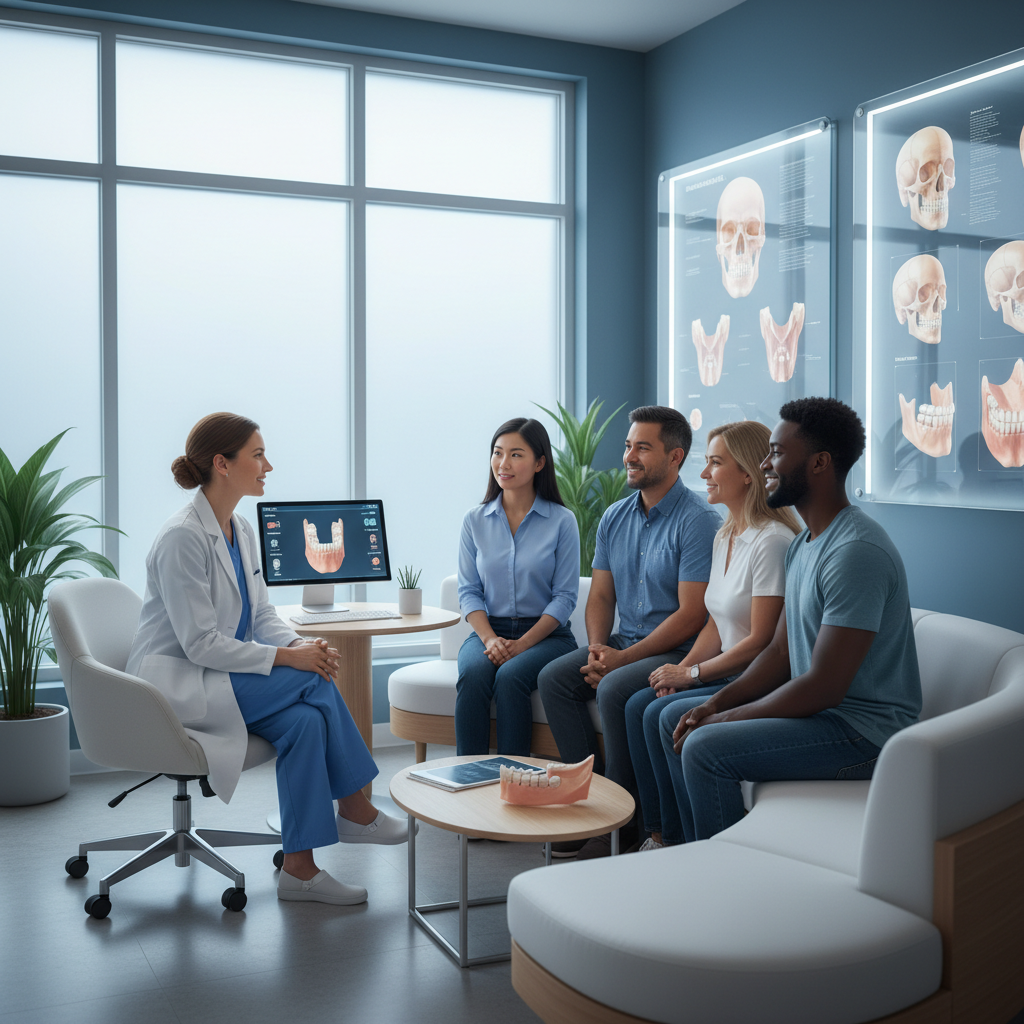
When the upper and lower jaws do not meet correctly, the consequences ripple through a patient’s entire life. It is not just a matter of a crooked smile; significant jaw misalignment can impair basic functions like chewing, speaking, and breathing. For many, these skeletal discrepancies are too severe to be corrected by orthodontics (braces) alone.
This is the domain of orthognathic surgery, also known as corrective jaw surgery. This transformative procedure repositions the jaws to correct skeletal irregularities, improving both the patient’s ability to function and their facial appearance.
As a subspecialty of oral and maxillofacial surgery, this field demands precision and deep anatomical knowledge. Dr. Larry Wolford is a globally recognized authority in this discipline, having pioneered techniques that are now standards of care worldwide. This guide explores the scope of orthognathic surgery and the life-changing outcomes it offers.
What is Orthognathic Surgery?
Orthognathic (from the Greek orthos, meaning straight, and gnathos, meaning jaw) surgery involves moving the bones of the upper jaw (maxilla), lower jaw (mandible), or chin. The goal is to correct minor and major skeletal and dental irregularities, including the misalignment of jaws and teeth.
While orthodontics can straighten teeth, it cannot alter the skeletal structure of the face in adults. When the mismatch in jaw growth is significant, surgery is required to physically move the bones into their proper relationship. This alignment ensures that the teeth meet correctly and the facial skeleton is balanced.
Conditions Treated with Corrective Jaw Surgery
Patients who benefit from orthognathic surgery often have a history of bite problems or facial imbalance. Common conditions addressed include:
1. Malocclusion (Bad Bite)
- Overbite (Retrognathia): The lower jaw is set too far back, often giving the appearance of a “weak” chin.
- Underbite (Prognathia): The lower jaw protrudes beyond the upper jaw, prominent in the profile.
- Open Bite: The upper and lower teeth do not touch when the mouth is closed, making chewing difficult.
- Crossbite: Some bottom teeth sit outside the top teeth when the mouth is closed.
2. Facial Asymmetry
Some patients experience uneven growth where one side of the jaw grows faster or slower than the other, leading to a crooked or canted smile. Surgery can re-center the chin and level the jaws to restore symmetry.
3. Obstructive Sleep Apnea (OSA)
When the jaws are recessed, the airway space behind the tongue is often restricted. By advancing the upper and lower jaws (Maxillomandibular Advancement or MMA), surgeons can permanently open the airway. The American Association of Oral and Maxillofacial Surgeons (AAOMS) notes that this surgery is a highly effective treatment for OSA when CPAP therapy is ineffective or intolerable.
4. TMJ Disorders
Misaligned jaws can place excessive stress on the temporomandibular joints (TMJ), leading to pain, clicking, and locking. Correcting the skeletal relationship often relieves this pressure.
The Procedure: Precision and Technology
Orthognathic surgery is a complex process that typically involves a team approach between the maxillofacial surgeon and an orthodontist.
The Planning Phase
Modern surgery relies on virtual surgical planning (VSP). Using high-resolution CT scans, Dr. Wolford creates a 3D model of the patient’s skull. The surgery is then simulated on a computer, allowing the team to visualize the movements of the bones down to the millimeter. This technology is used to fabricate custom surgical splints and guides, ensuring the plan is executed perfectly in the operating room.
The Surgery
The procedure is performed under general anesthesia. In most cases, incisions are made inside the mouth, leaving no visible scars on the face. The surgeon cuts the bone (osteotomy), moves it into the pre-planned position, and secures it with tiny titanium plates and screws. These fixations are biocompatible and usually remain in place permanently.
Dr. Wolford is also a pioneer of the “Surgery-First” approach for select cases. Traditionally, patients wear braces for a year or more before surgery. The Surgery-First approach performs the skeletal correction at the beginning of treatment, which can significantly shorten the total treatment time.
The Benefits of Surgical Correction
The impact of orthognathic surgery extends far beyond a straight smile. The benefits are functional, physiological, and psychological.
- Improved Chewing and Digestion: Correcting the bite allows patients to chew food properly, which is the first step in digestion.
- Clearer Speech: Alignment of the jaws and tongue often resolves speech impediments caused by skeletal deformities.
- Enhanced Breathing: Expanding the airway can cure sleep apnea, leading to better sleep quality and reduced risk of heart disease.
- Facial Harmony: Bringing the facial features into proportion dramatically improves aesthetics. A balanced profile often boosts self-esteem and confidence.
- Joint Health: Properly aligned jaws function more smoothly, reducing the risk of long-term TMJ degeneration.
For more information on the outcomes of these procedures, the Journal of Oral and Maxillofacial Surgery publishes extensive peer-reviewed data on patient satisfaction and functional improvements.
Why Choose Dr. Larry Wolford?
Orthognathic surgery is widely considered the most complex procedure in the specialty. It requires a surgeon who is not only a technician but an artist and an expert in biomechanics.
Dr. Larry Wolford’s reputation in this field is unmatched. He has authored numerous textbooks and research papers specifically on orthognathic surgical techniques. He is particularly renowned for:
- Concomitant TMJ and Orthognathic Surgery: Dr. Wolford developed protocols to treat jaw misalignment and TMJ pathology in a single surgery, improving stability and outcomes.
- Complex Revision Cases: He regularly treats patients who have had unsuccessful surgeries elsewhere, using advanced techniques to correct complications and restore function.
- Innovation: Dr. Wolford holds several patents for devices and techniques used in maxillofacial surgery, demonstrating his commitment to advancing the field.
Taking the Next Step
If you struggle with chewing, chronic jaw pain, sleep apnea, or are unhappy with your facial profile, orthognathic surgery may offer the solution you have been looking for. It is a major decision, but for thousands of patients, it is the decision that gave them back their quality of life.
Do not let skeletal misalignment dictate your health or confidence.
Contact Dr. Larry Wolford’s office today to schedule a comprehensive consultation. Discover how world-class expertise can realign your future.