Sleep is not a luxury; it is a biological necessity. Yet, for millions of people suffering from Obstructive Sleep Apnea (OSA), a restful night is impossible to achieve. While loud snoring is the most recognized symptom, the reality of OSA is far more dangerous: it is a repeated suffocation during sleep that stresses the heart and brain.
The gold standard for treatment has long been the CPAP (Continuous Positive Airway Pressure) machine. However, many patients find the device intolerable or ineffective. For these individuals, maxillofacial surgery offers more than just a treatment—it offers a potential cure.
By addressing the root anatomical cause of the obstruction, surgeons can permanently expand the airway. This article explores the mechanics of OSA, the limitations of non-surgical management, and how Maxillomandibular Advancement (MMA) performed by an expert like Dr. Larry Wolford can restore your health and quality of life.
Understanding Obstructive Sleep Apnea (OSA)
OSA is a serious sleep disorder where the throat muscles intermittently relax and block the airway during sleep. This blockage prevents air from reaching the lungs. In response, the brain senses the lack of oxygen and briefly rouses the body from sleep to reopen the airway. This cycle can repeat hundreds of times a night.
The Anatomical Problem
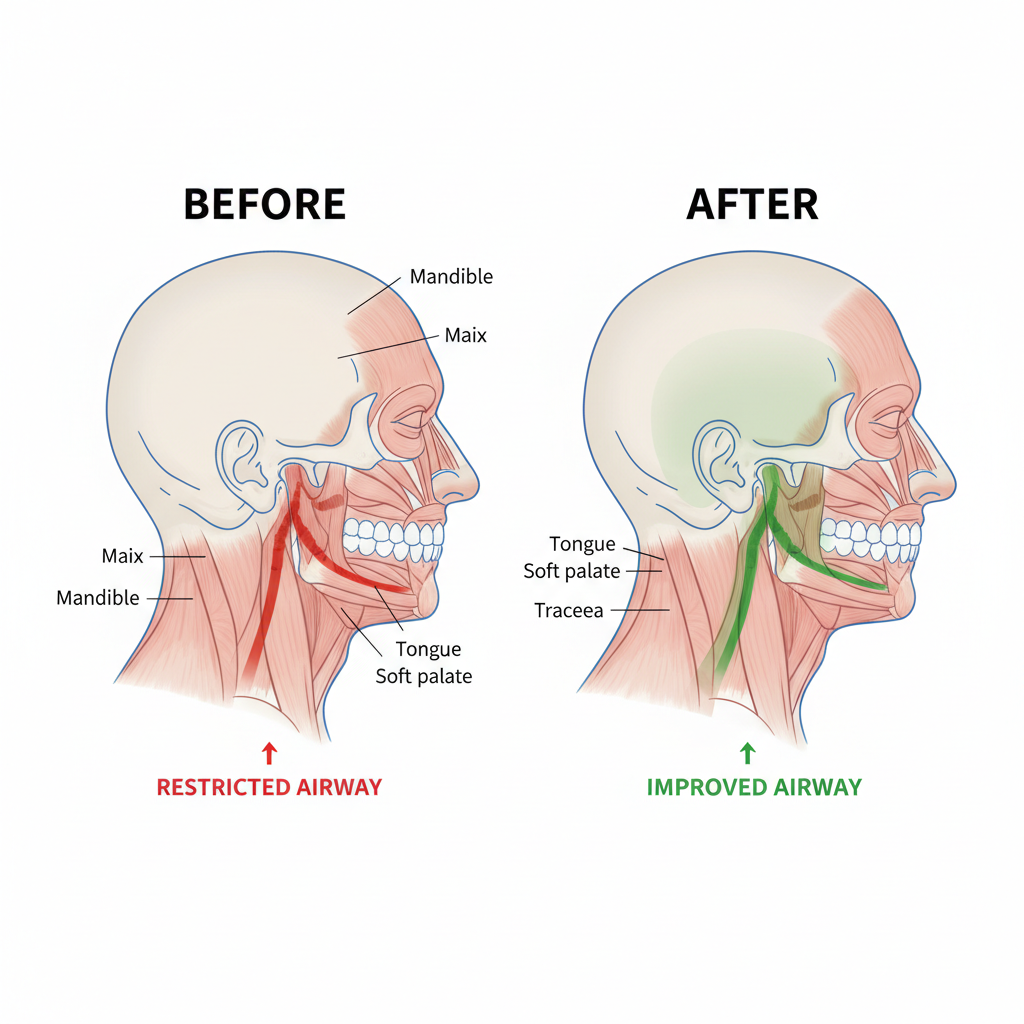
In many patients, the root cause of OSA is skeletal. If the upper and lower jaws are recessed (set back too far), the space at the back of the throat is naturally narrow. When the muscles relax during sleep, the tongue and soft tissues collapse backward, easily sealing off this already tight space.
Health Risks Beyond Fatigue
According to the Mayo Clinic, untreated sleep apnea is linked to severe health complications, including:
- High blood pressure (Hypertension)
- Heart disease and irregular heart rhythms (Arrhythmias)
- Type 2 diabetes
- Stroke
- Chronic daytime fatigue and cognitive impairment
When CPAP Is Not Enough
For decades, the primary treatment for OSA has been CPAP therapy, which uses a machine to blow air into the throat to keep it open. While effective when used correctly, long-term compliance is a major hurdle.
Studies show that a significant percentage of patients abandon CPAP therapy due to discomfort, claustrophobia, noise, or skin irritation. Furthermore, CPAP is a management tool, not a cure; it only works while the mask is on. When patients cannot or will not use their CPAP, they remain at risk. This is where surgical intervention becomes a vital consideration.
Maxillomandibular Advancement (MMA): The Surgical Solution
Maxillomandibular Advancement (MMA) is the most effective surgical treatment for severe obstructive sleep apnea. Unlike soft tissue surgeries (such as removing the tonsils or uvula), which have variable success rates, MMA addresses the skeletal framework of the airway.
How It Works
During this procedure, the maxillofacial surgeon cuts the bones of the upper jaw (maxilla) and lower jaw (mandible). Both jaws are then moved forward. Because the tongue and soft palate are attached to the jaws, moving the bones forward physically pulls these soft tissues away from the back of the throat.
This movement dramatically enlarges the airway space. By expanding the skeletal framework, the surgery prevents the tissues from collapsing during sleep, regardless of muscle relaxation.
The American Association of Oral and Maxillofacial Surgeons (AAOMS) notes that MMA has a high success rate, often eliminating the need for a CPAP machine entirely.
Dr. Larry Wolford: Pioneering Airway Reconstruction
Surgical treatment for sleep apnea requires extreme precision. The surgeon must balance maximum airway expansion with facial aesthetics and dental function. Dr. Larry Wolford is a world-renowned authority in this specific domain.
The Counter-Clockwise Rotation Technique
Dr. Wolford is particularly noted for his refinement of the “counter-clockwise rotation” of the maxillomandibular complex. In this sophisticated approach, the jaws are not just moved forward; the occlusal plane (bite angle) is altered.
By rotating the jaws, Dr. Wolford can achieve a greater advancement of the lower jaw and chin relative to the upper jaw. This maximizes the opening of the posterior airway space—the critical choke point in OSA—while ensuring the patient’s facial profile remains balanced and aesthetically pleasing.
A Comprehensive Approach
Dr. Wolford’s protocol often involves:
- 3D Virtual Planning: Using advanced imaging to map the airway and simulate the surgery beforehand.
- TMJ Assessment: Ensuring the jaw joints are stable enough to handle the advancement.
- Turbinate Reduction: Addressing nasal obstructions simultaneously to ensure clear breathing through the nose.
The Benefits of Surgical Intervention
Choosing surgery is a significant decision, but the payoffs for OSA patients are transformative.
- Permanent Relief: For many, MMA surgery is a curative procedure. Patients can often sleep naturally without devices.
- Cardiovascular Health: Restoring oxygen levels reduces the strain on the heart, lowering the risk of hypertension and stroke.
- Restored Alertness: Eliminating sleep fragmentation restores deep, restorative sleep, ending the fog of chronic fatigue.
- Aesthetic Enhancement: Because many OSA patients have recessed chins or “weak” jawlines, advancing the jaws often improves facial balance and profile.
Research published in the Journal of Oral and Maxillofacial Surgery consistently demonstrates that MMA significantly reduces the Apnea-Hypopnea Index (AHI)—the benchmark for measuring sleep apnea severity—often to normal levels.
Reclaim Your Sleep and Your Health
Obstructive Sleep Apnea is a condition that steals your energy by day and threatens your health by night. You do not have to resign yourself to a lifetime of struggle with a CPAP machine or the risks of untreated apnea.
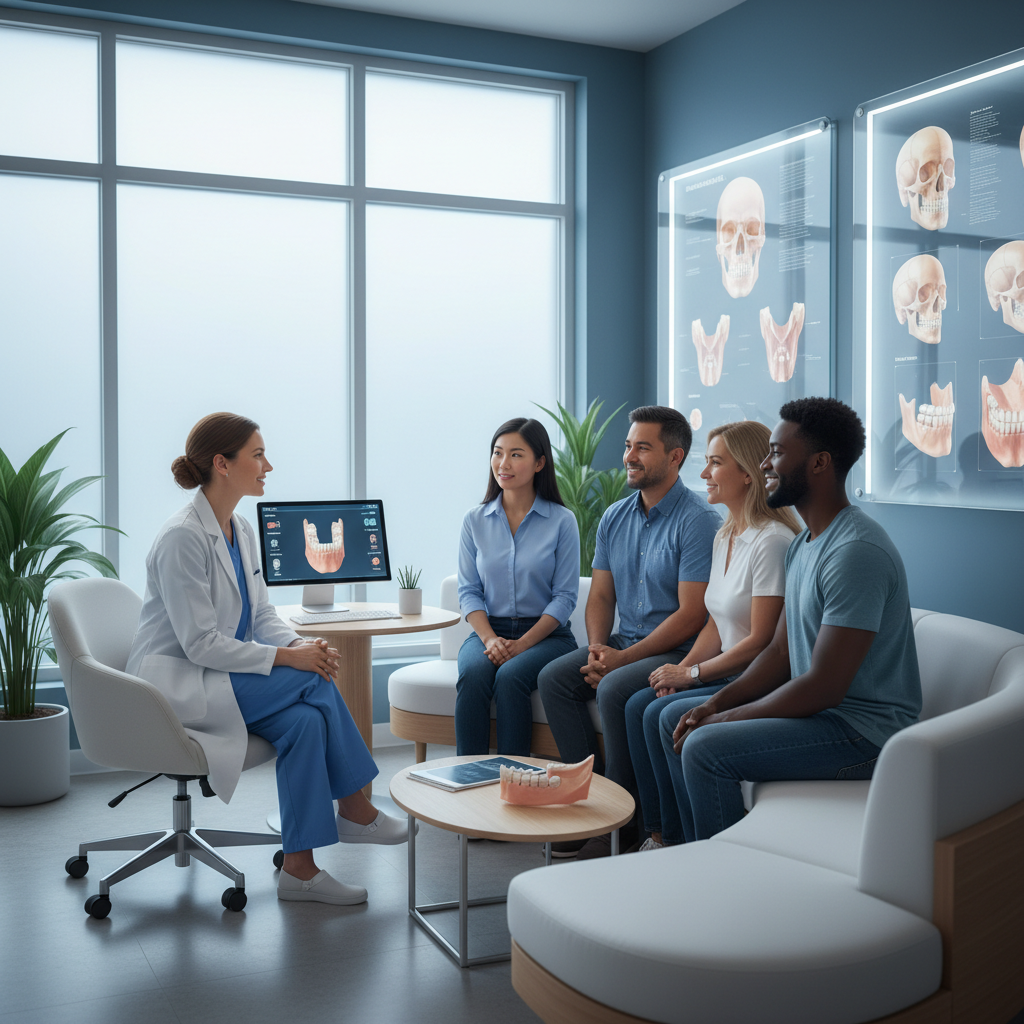
If you have been diagnosed with OSA and are seeking a permanent solution, you need an expert who understands the complex relationship between the facial skeleton and the airway.
Contact Dr. Larry Wolford’s office today to schedule a consultation. Let us evaluate your airway anatomy and discuss how maxillofacial surgery can help you breathe freely and live fully.