You wake up tired. Your partner complains about your snoring. You rely on caffeine to get through the afternoon slump. For millions of people, Obstructive Sleep Apnea (OSA) is not just a nuisance—it is a serious health condition that robs them of rest and puts their heart health at risk.
While many patients start treatment with a CPAP machine, it isn’t the right solution for everyone. Masks can be uncomfortable, noisy, and difficult to travel with. If you have struggled with traditional therapies without success, the root of the problem might not be in your lifestyle or your pillow, but in the actual structure of your jaw.
Corrective jaw surgery, specifically Maxillomandibular Advancement (MMA), offers a surgical solution that targets the anatomical cause of sleep apnea.
The Hidden Link Between Your Jaw and Your Airway
To understand why surgery works, you first need to understand the mechanics of OSA. When you sleep, the muscles in your throat relax. In patients with sleep apnea, this relaxation causes the soft tissues—like the tongue and soft palate—to collapse backward, blocking the airway.
Why does this happen to some people and not others? Often, it is a matter of skeletal structure.
If your upper and lower jaws are recessed (set too far back), your airway is naturally narrower. Even a small amount of tissue relaxation can completely close off a narrow pipe. This forces your body to wake up momentarily to gasp for air, destroying your sleep quality hundreds of times a night.
Signs Your Jaw Structure May Be Causing Apnea:
- Receding chin: A “weak” chin often indicates a lower jaw that is set back, crowding the throat.
- Overbite: A significant overbite suggests the lower jaw is underdeveloped.
- Chronic congestion: Narrow nasal passages often accompany narrow jaws.
- Failed CPAP therapy: If pushing air into the throat doesn’t keep it open, the blockage may be too severe due to skeletal crowding.
For more on these indicators and their connection to OSA, see the Sleep Apnea–Jaw Structure Connection.
What is Maxillomandibular Advancement (MMA)?
Maxillomandibular Advancement (MMA) is the gold standard surgical treatment for severe obstructive sleep apnea when conservative measures fail. While the name sounds complex, the concept is straightforward: we physically expand the airway by moving the skeletal framework forward.
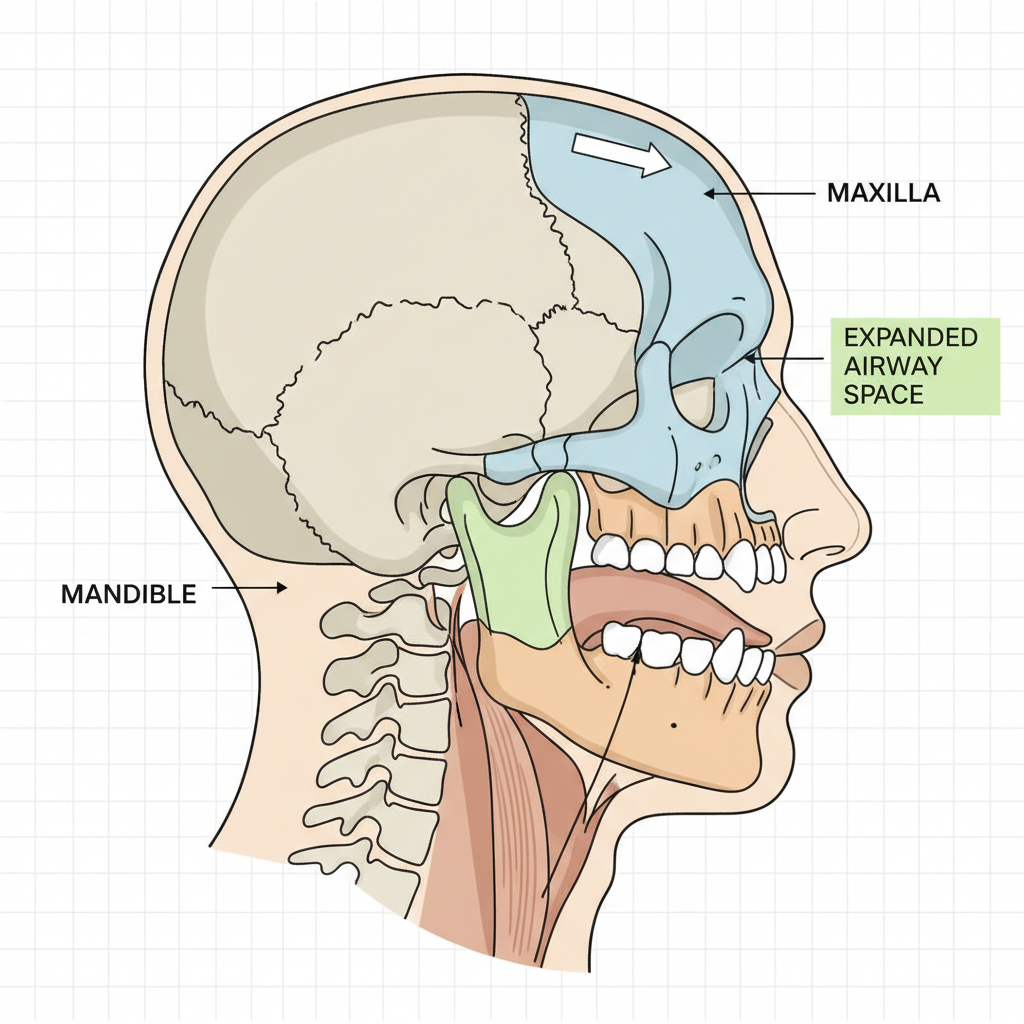
During this procedure, Dr. Larry Wolford precisely cuts the bones of the upper jaw (maxilla) and lower jaw (mandible). He then advances both jaws forward and secures them in a new, permanent position using small titanium plates and screws.
How MMA Opens the Airway
Moving the jaws forward pulls the attached soft tissues forward as well. This action:
- Tightens the soft palate: Prevents it from collapsing during sleep.
- Moves the tongue forward: Creates significantly more space at the back of the throat.
- Expands the pharyngeal airway: Physically enlarges the tube you breathe through.
Unlike soft tissue surgeries that only trim the uvula or palate (which can be painful and often have high relapse rates), MMA changes the actual architecture of your face to support breathing. For a comparison of surgical options, visit the American Academy of Sleep Medicine.
The Long-Term Benefits of Surgical Correction
Choosing surgery is a significant decision, but for patients with moderate to severe OSA, the payoff is often life-changing. The primary goal is to eliminate the need for a CPAP machine and restore natural, restful sleep.
1. High Success Rate
Clinical studies consistently show that MMA is the most effective surgery for sleep apnea, with success rates often exceeding 90%. Most patients experience a dramatic reduction in their Apnea-Hypopnea Index (AHI), the score used to measure sleep apnea severity. Explore more in this systematic review of MMA outcomes.
2. Cardiovascular Protection
Untreated sleep apnea is a major risk factor for high blood pressure, stroke, and heart failure. By permanently opening the airway, surgery reduces the strain on your heart and lowers these long-term risks. See this Mayo Clinic summary on OSA and cardiovascular health.
3. Improved Quality of Life
The benefits extend far beyond the bedroom. Patients often report:
- Increased daytime energy and alertness.
- Better mood and cognitive function.
- Improved metabolic health.
- Reduction or elimination of snoring.
For patient stories and research-backed quality of life improvement, see this recent study.
4. Aesthetic Enhancement
While the primary goal is functional, advancing a recessed jawline often improves facial balance. Patients typically gain a stronger chin and a more defined jawline, which can enhance facial aesthetics alongside health improvements.
Learn more with the American Association of Oral and Maxillofacial Surgeons.
Is Jaw Surgery Right for You?
Surgery is generally recommended for patients who have moderate to severe OSA and have not found relief with CPAP or oral appliances. It is also the preferred option for patients with clear skeletal deformities obstructing their airway.
To review candidacy criteria and consultation guidelines, visit the Johns Hopkins Sleep Surgery Center.
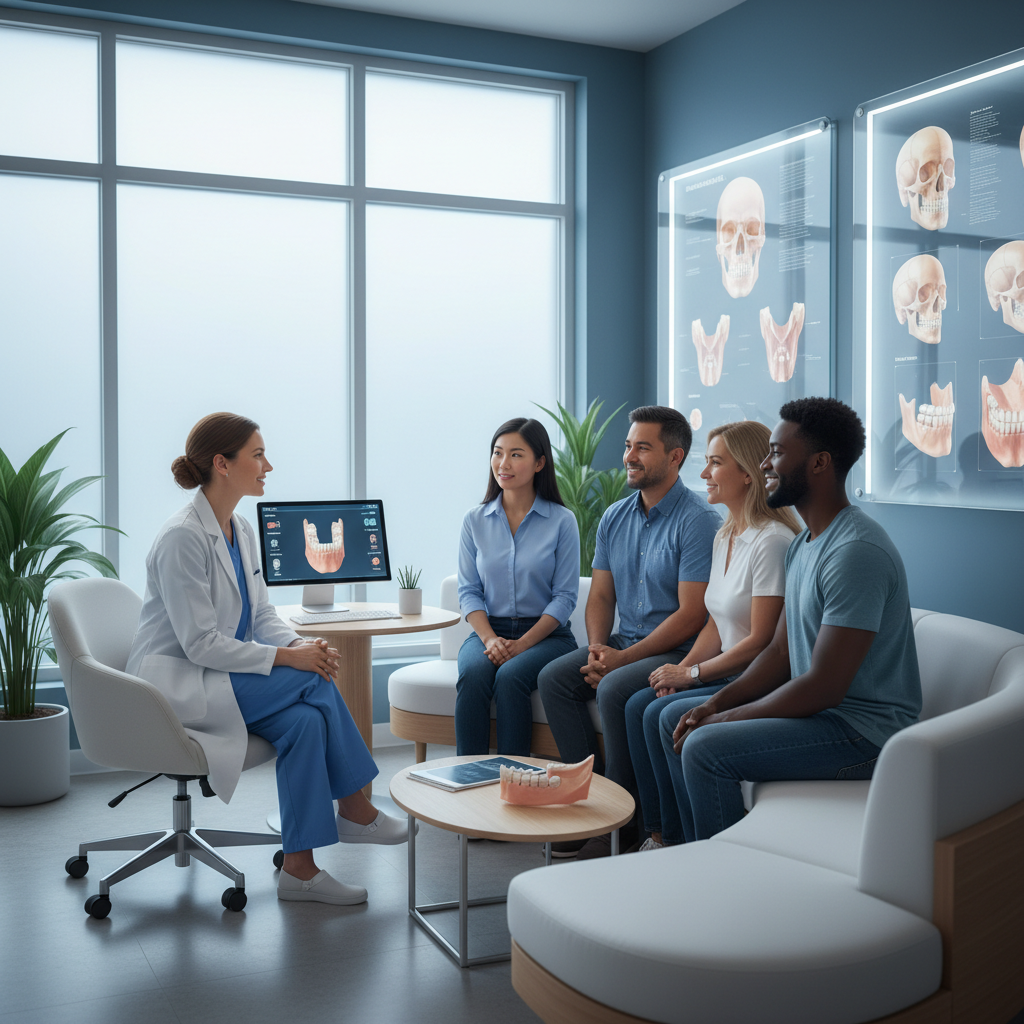
Dr. Wolford is a world-renowned pioneer in orthognathic surgery. His approach combines precise surgical technique with a deep understanding of airway dynamics. Every patient undergoes a comprehensive evaluation, including 3D imaging, to visualize the airway obstruction and plan the precise movements needed to maximize airflow.
Breathe Freely Again
You do not have to resign yourself to a lifetime of restless nights and cumbersome machines. If you suspect your jaw structure is affecting your breathing, it is time to explore a permanent solution.
Take the first step toward better health and restful sleep. Contact our office today to schedule a consultation with Dr. Larry Wolford. Let us help you evaluate your airway and determine if Maxillomandibular Advancement is the right path for you.