For individuals suffering from severe temporomandibular joint (TMJ) disorders, the prospect of surgery can bring both hope and apprehension. The idea of operating on such a complex and delicate joint is understandably daunting. However, the field of maxillofacial surgery has seen remarkable progress over the past couple of decades. Modern surgical techniques are safer, more precise, and more effective than ever before, offering patients a reliable path to a life free from chronic jaw pain.
These innovations are not just incremental changes; they represent a fundamental shift in how surgeons approach TMJ dysfunction. From computer-assisted planning to custom-fabricated implants, today’s advancements are transforming patient outcomes. An expert like Dr. Larry Wolford, a pioneer in the field, utilizes these technologies to provide personalized solutions for even the most complex cases. This article will explore what patients need to know about the latest in TMJ surgery.
The Evolution of TMJ Surgery
In the past, TMJ surgery was often considered a last resort with unpredictable results. Early procedures could be invasive and sometimes failed to address the underlying biomechanical problems causing the pain. Fortunately, a deeper understanding of the TMJ’s intricate function, combined with technological breakthroughs, has revolutionized the specialty.
Today’s surgical approach focuses on preserving as much of the natural joint as possible and, when necessary, replacing damaged components with highly sophisticated, custom-designed prosthetics. The goal is no longer just pain relief, but the complete restoration of function and long-term stability.
Key Surgical Advancements and Techniques
Modern TMJ surgery is characterized by precision, personalization, and minimally invasive approaches whenever possible. These jaw surgery innovations have dramatically improved safety and predictability.
3D Surgical Planning and Virtual Modeling
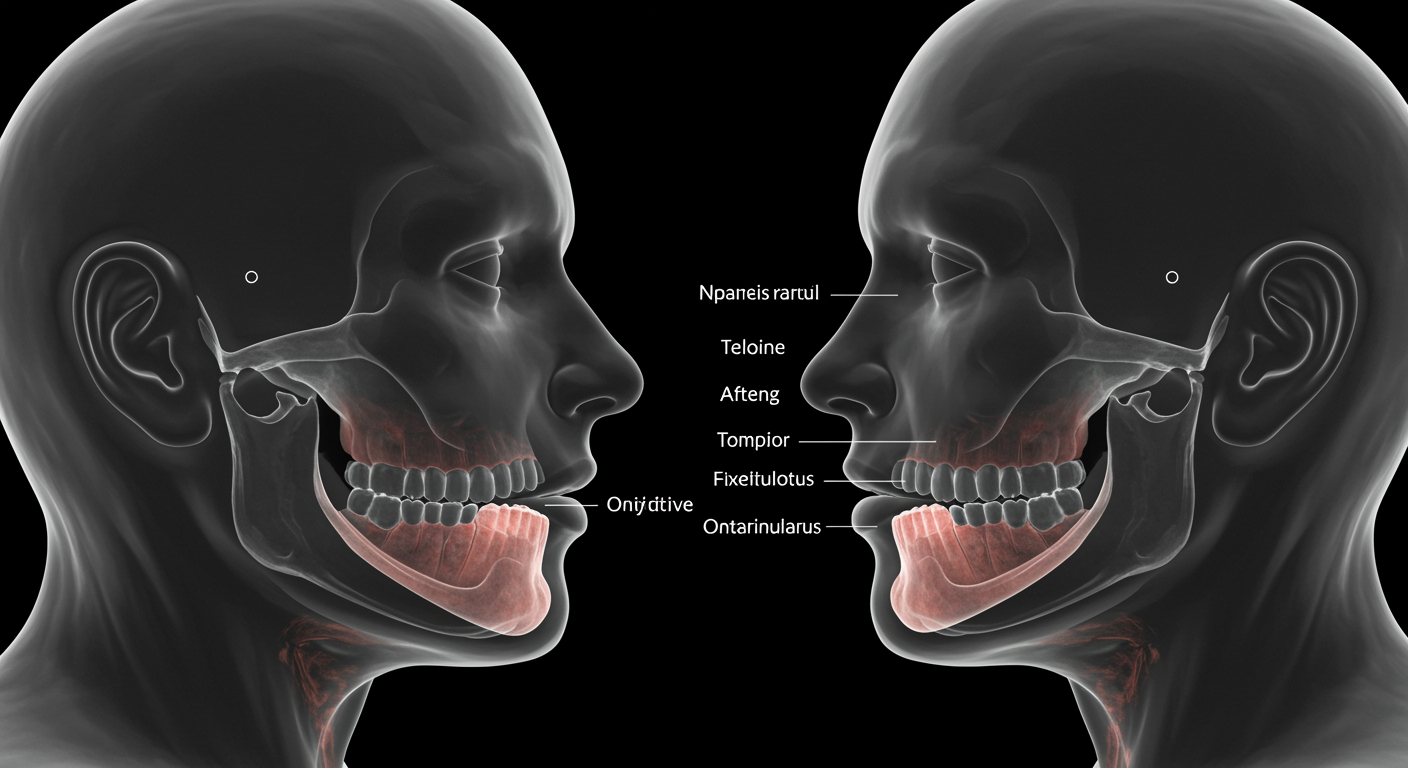
Before a single incision is made, surgeons can now perform the entire procedure in a virtual environment. Using high-resolution CT scans, a 3D digital model of the patient’s skull and jaw is created. This allows the surgeon to:
- Precisely diagnose the structural problem.
- Simulate the surgery and map out exact bone movements.
- Anticipate potential challenges and plan for them.
- Design custom surgical guides and implants that fit the patient’s unique anatomy perfectly.
This level of detailed planning minimizes surprises during the operation and ensures a more accurate and predictable outcome.
Custom-Fitted Total Joint Prosthetics
For patients with severe joint degeneration from arthritis, trauma, or failed previous surgeries, a total joint replacement is often the best solution. Unlike the “stock” implants of the past, modern TMJ prosthetics are custom-fabricated for each patient.
Dr. Larry Wolford is a world leader in developing and implementing these custom devices. Using the patient’s 3D CT scan data, a prosthetic joint is designed and manufactured to mimic the natural anatomy and movement of the original joint. This personalized approach leads to better function, improved comfort, and greater longevity of the implant.
Fat Grafts for Joint Repair
In certain cases where the joint disc is damaged or has been removed, a novel technique involves using a graft of the patient’s own fat (harvested from the abdomen) to reconstruct the joint lining. This fat graft acts as a cushion, reducing friction and inflammation within the joint. This biological solution has proven highly effective in alleviating pain and restoring smoother jaw movement for many patients, preventing the need for a total joint replacement in some instances.
The Benefits of Modern TMJ Surgery
The shift toward more advanced, personalized surgical care offers significant advantages for patients. These benefits go beyond just fixing a painful joint; they improve overall health and well-being.
- Greater Surgical Precision: Computer-aided planning allows for sub-millimeter accuracy, leading to better functional and aesthetic results.
- Improved Long-Term Outcomes: Custom implants and biocompatible materials result in more durable and stable repairs, reducing the likelihood of future problems.
- Faster and Smoother Recovery: Advanced techniques can be less invasive, often resulting in less post-operative swelling and discomfort.
- Restoration of Normal Function: The primary goal is to allow patients to eat, speak, and yawn without pain or limitation.
- Comprehensive Problem Solving: Modern surgery can simultaneously address related issues, such as bite misalignment and sleep apnea, providing a holistic solution.
Case Study: From Chronic Pain to a New Beginning
Emily, a 42-year-old graphic designer, had been battling TMJ issues for more than 15 years. Her condition had progressively worsened, starting with clicking and popping and escalating to severe, unrelenting pain and limited jaw opening. Multiple non-surgical treatments had failed, and a previous “clean-up” surgery at another facility provided only temporary relief. Her joint was now bone-on-bone, a condition known as idiopathic condylar resorption.
Emily sought a consultation with Dr. Larry Wolford. A comprehensive evaluation using 3D imaging confirmed severe degeneration in both of her jaw joints. Dr. Wolford recommended a bilateral total joint replacement using custom-fitted prosthetics. The virtual surgical plan showed Emily exactly how the new joints would restore her jaw’s position and function.
The surgery was a resounding success. After the recovery period, Emily was completely free of the pain that had plagued her for years. She could enjoy her favorite foods again and no longer worried about her jaw locking. The custom prosthetics not only eliminated her pain but also restored balance to her facial profile, subtly improving her appearance and boosting her confidence. Emily’s story is a powerful example of how advanced surgical solutions can provide a definitive cure for patients who have lost hope.
What to Expect During Recovery
Recovery from TMJ surgery is a gradual process that requires patience and adherence to your surgeon’s instructions. While the timeline varies based on the specific procedure, patients can generally expect the following:
- Initial Hospital Stay: Most patients stay in the hospital for 1-3 days for monitoring after surgery.
- Dietary Restrictions: A liquid or non-chew diet is necessary for several weeks to allow the jaw to heal without stress. You will slowly progress to soft foods and then a normal diet.
- Managing Swelling and Discomfort: Swelling is a normal part of the healing process and typically peaks 2-3 days after surgery. Pain is managed with prescribed medication.
- Physical Therapy: Gentle jaw-opening exercises are often introduced early in the recovery phase to restore mobility and prevent stiffness.
- Return to Normal Activities: Most patients can return to work or school within 2-4 weeks, though strenuous physical activity will be restricted for longer. Full healing can take several months.
A New Era in Jaw Health
The world of TMJ surgery has changed for the better. Patients no longer have to settle for a life of chronic pain or accept treatments with uncertain outcomes. With today’s technology and surgical expertise, it is possible to achieve lasting relief and restore normal jaw function.
If you are suffering from a debilitating TMJ disorder, it is worthwhile to explore these modern solutions. You can find more information about Advancements in TMJ Surgery: What Patients Need to Know and determine if a surgical consultation is the right next step for you.
Helpful Resources
- The TMJ Association: A patient advocacy organization offering information and support.
- American Society of Temporomandibular Joint Surgeons (ASTMJS): Provides information on surgical standards and practices.