The birth of a child is a momentous occasion, but when a baby is born with a cleft lip or palate, parents are often faced with a wave of questions and concerns. These conditions, which are among the most common birth defects, present immediate challenges related to feeding, breathing, and speech development. Fortunately, modern maxillofacial surgery, as part of a dedicated multidisciplinary team, offers a clear and effective path toward reconstruction and a healthy life.
Treating cleft lip and palate is not a single event but a journey that unfolds over several years. It requires a highly coordinated approach from a team of specialists, with the oral and maxillofacial surgeon playing a central role in reconstructing the anatomy of the face and mouth.
This article provides an overview of cleft lip and palate, explains the staged surgical approach to repair, and highlights why the expertise of a surgeon like Dr. Larry Wolford is essential in managing these complex cases.
What Are Cleft Lip and Cleft Palate?
Cleft lip and cleft palate are birth defects that occur when a baby’s lip or mouth do not form properly during pregnancy. A “cleft” is a gap or opening.
- Cleft Lip: This is a physical split or separation of the two sides of the upper lip. The gap can be a small notch or a large opening that extends up into the nose. It can occur on one side (unilateral) or both sides (bilateral).
- Cleft Palate: This is a split or opening in the roof of the mouth (palate). A cleft palate can involve the hard palate (the bony front portion) and/or the soft palate (the fleshy back portion).
A child can be born with a cleft lip, a cleft palate, or both. According to the Centers for Disease Control and Prevention (CDC), these conditions result from incomplete fusion of the facial structures during early fetal development. The exact cause is often unknown but is thought to be a combination of genetic and environmental factors.
The Challenges Presented by Clefts
The openings in the lip and palate create immediate functional problems for a newborn.
- Feeding Difficulties: The gap in the palate prevents the baby from creating the suction needed to breastfeed or drink from a standard bottle. Specialized bottles and feeding techniques are required.
- Ear Infections and Hearing Loss: Children with cleft palate are more prone to fluid buildup in the middle ear, which can lead to chronic ear infections and potential hearing loss if not managed by an otolaryngologist (ENT).
- Speech and Language Delays: The palate is crucial for forming sounds. Without a complete roof of the mouth, air can escape through the nose during speech, resulting in a nasal-sounding voice and difficulty articulating certain consonants.
- Dental Problems: Clefts can affect the development of the gums and teeth, leading to missing, extra, or malformed teeth and bite problems.
The Role of the Maxillofacial Surgeon in Cleft Repair
Maxillofacial surgeons are the architects of cleft reconstruction. Their expertise in the hard and soft tissues of the face, jaws, and mouth is fundamental to the treatment process. The repair is not a single surgery but a series of carefully timed procedures designed to align with the child’s growth and development.
1. Cleft Lip Repair (Cheiloplasty)
This is typically the first surgery, performed when the child is around 3 to 6 months old. The primary goal is to close the separation in the lip. The surgeon makes incisions on either side of the cleft to create flaps of tissue, which are then drawn together and sutured to create a functional and more normal-looking upper lip. This procedure also involves an initial reconstruction of the nostril on the affected side to improve symmetry.
2. Cleft Palate Repair (Palatoplasty)
Palate repair surgery is usually done between the ages of 9 and 18 months. This timing is critical—it’s late enough that the facial structures have grown, but early enough to facilitate proper speech development. The surgeon rebuilds the roof of the mouth by repositioning the tissues and muscles of the soft palate to close the gap. A successful palatoplasty creates a functional barrier between the nose and mouth, which is essential for speech, swallowing, and preventing food from entering the nasal cavity.
3. Alveolar Bone Grafting
If the cleft extends through the upper gum line (alveolus), a bone graft is needed to create a stable, continuous arch. This procedure is typically performed between the ages of 7 and 12, before the permanent canine teeth erupt. The surgeon takes a small amount of bone, usually from the patient’s hip, and places it into the gap in the gum line. This graft provides a solid foundation for the erupting teeth, supports the base of the nose, and closes any remaining fistulas (openings) between the mouth and nose.
4. Orthognathic (Jaw) Surgery
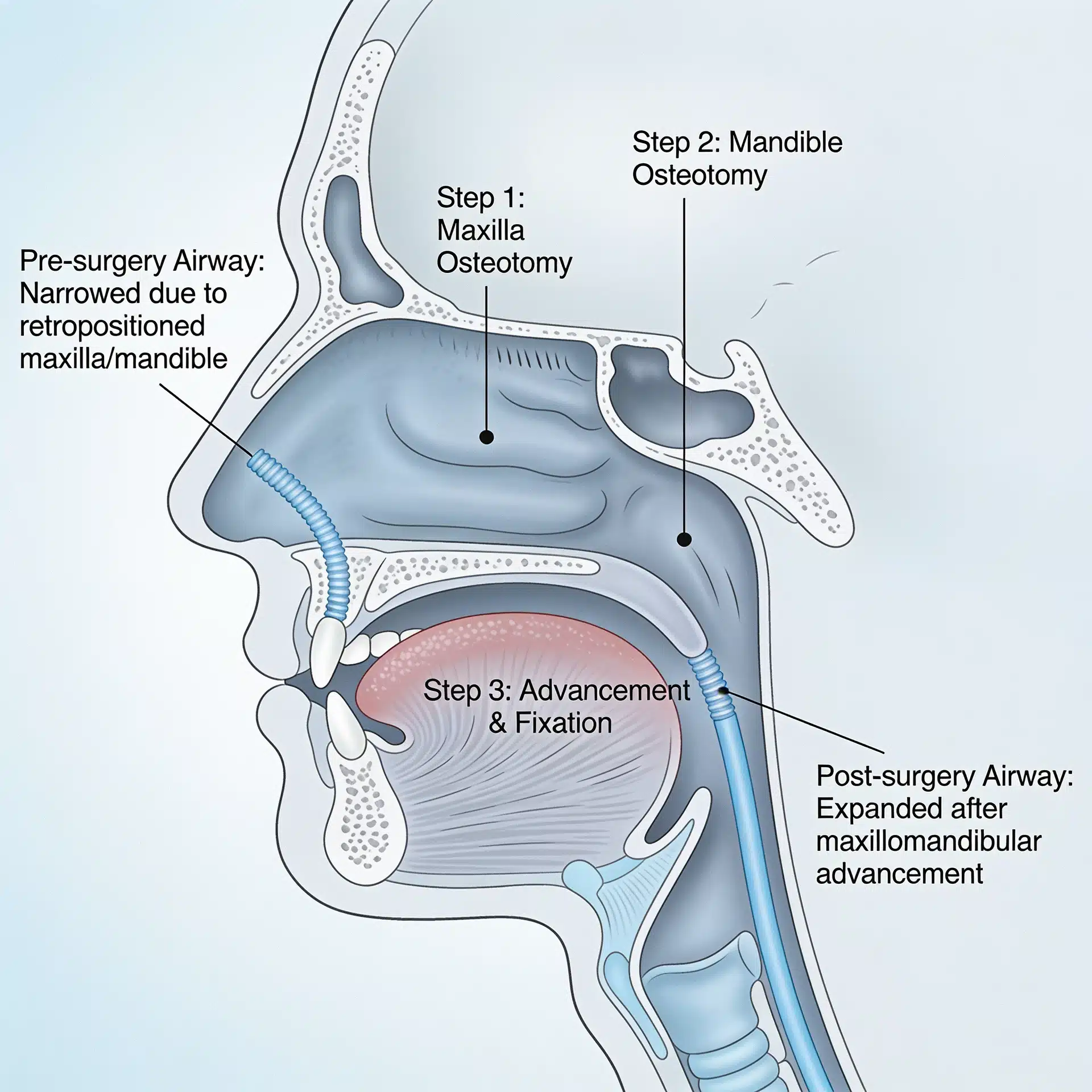
Despite early repairs, some children with clefts experience deficient growth of the upper jaw, leading to a misaligned bite and a sunken mid-face appearance. In the teenage years, after facial growth is complete, orthognathic surgery may be required to move the upper jaw forward. This final major step corrects the bite, improves breathing, and establishes facial balance.
The Multidisciplinary Team Approach
Successful cleft care is impossible without a team of specialists working together. The American Cleft Palate-Craniofacial Association (ACPA) advocates for this team-based model. The team, often led by the maxillofacial surgeon or plastic surgeon, typically includes:
- Orthodontist: Manages tooth alignment and prepares the dental arches for surgery.
- Speech-Language Pathologist: Works with the child before and after palate surgery to develop clear speech.
- Otolaryngologist (ENT): Manages ear infections and hearing issues.
- Pediatric Dentist: Oversees oral health.
- Geneticist: Helps families understand the causes of the cleft.
- Psychologist/Social Worker: Provides support to the child and family.
This coordinated care ensures that all aspects of the child’s health and development are addressed at the appropriate time.
Expertise in Complex Cleft and Craniofacial Care
Managing cleft patients, particularly those who require jaw surgery, demands a surgeon with a deep understanding of facial growth, biomechanics, and complex reconstructive techniques. Dr. Larry Wolford is a recognized leader in treating the most challenging cleft and craniofacial cases.
His extensive experience in orthognathic surgery is particularly relevant, as correcting the jaw relationships in cleft patients is a highly specialized procedure. Dr. Wolford has managed numerous cases involving patients who need revision surgeries or have complex deformities requiring advanced virtual surgical planning to achieve optimal functional and aesthetic outcomes. His contributions to the field ensure that patients receive care based on the most current and effective surgical protocols available. Further reading on these advanced techniques can be found in publications like the Journal of Oral and Maxillofacial Surgery.
A Journey Toward Wholeness
The path of a child with a cleft lip and palate is one of resilience. With the help of a dedicated medical team and the support of their family, they can overcome the initial challenges to lead full, healthy, and confident lives. Maxillofacial surgery is the cornerstone of this journey, providing the structural foundation upon which function and form are built.
If your family is navigating a cleft diagnosis or you are an adult seeking revision surgery for a past repair, consulting with an expert is the first step toward a comprehensive solution.
Contact Dr. Larry Wolford’s office today to schedule a consultation and learn more about the advanced surgical care available for cleft lip and palate reconstruction.